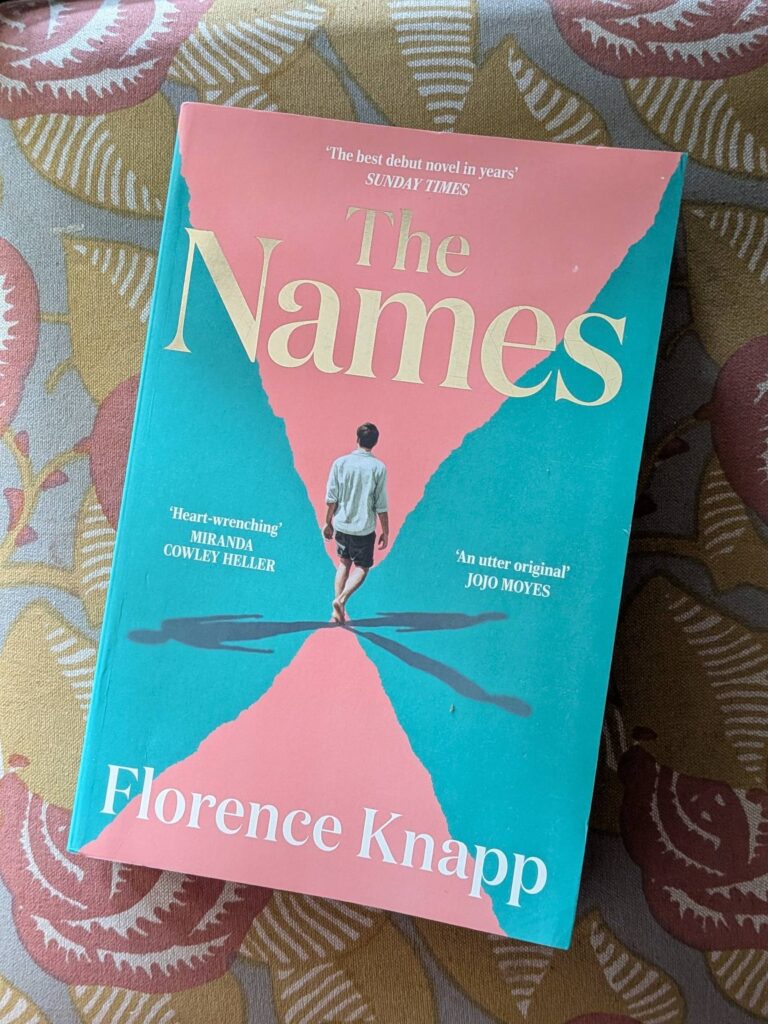
I have a thing for what-if scenarios, and that’s one of the reasons I loved The Names. I remember at least two occasions when they happened in a literary work – the first was a Hardy Boys + Nancy Drew book that asked you to turn to a particular page depending on the option you chose from the possible outcomes, and the second was a Jeffrey Archer short story (One Man’s Meat) which had Rare, Burnt, Overdone, and À Point endings!
In The Names, Florence Knapp creates three scenarios based on a single choice – registering the naming of a baby. From there, three pathways open – parallel lives of different people in the family that follow separate trajectories across three decades.
In terms of narrative, the book is structured as the state of the characters in a particular timeline and then taking seven-year leaps. This did force me to go back a few times to reorient myself, but it didn’t really bother me a lot. In fact, it helped me pay attention and recollect the small touches that show patterns, and sometimes notice a version of what happened in some other timeline.
The book somehow manages emotional depth while maintaining a brisk pace, and balancing it with a natural amount of unevenness across three different timelines in terms of character depth and arcs. The subject is not a pleasant one, and that requires some complicated work across the internal dialogues of all concerned (x 3). Not to mention getting the involvement of characters other than the key ones just right. Neither are easy tasks to accomplish.
What I really liked about The Names is that in addition to being a great story, it is also a thoughtful, mindful and emotionally aware reflection on choice and consequence.
I think this angst really hit me at the beginning of the decade when a colleague F, in a sombre moment far removed from his otherwise jovial, chill nature, confessed that he was moving abroad because he feared staying here.
Since that time, real life comments by friends and acquaintances referring to the ‘others’ have bothered me, and I have questioned them on that. More recently, when I read Anjum Hasan’s “History’s Angel”, I despaired what the life of a Muslim in India is.
I understand that I am probably privileged as a person who has born and has stayed in South India, and whose ancestors didn’t have to go through painful political and societal shifts every few generations. But must we really pass on this generational trauma?
I published the below first on Ram Navami, on LinkedIn , which predictably throttled it, despite reposts from folks with more than 50k followers on the platform.
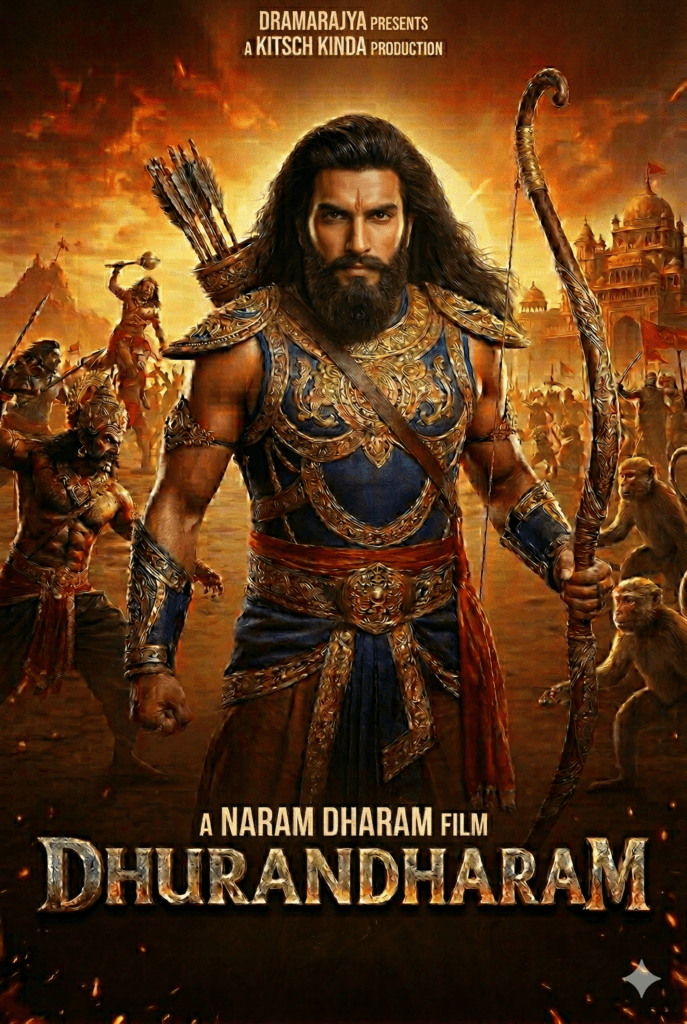
Dhurandhar, IMO, is not just entertainment, it’s a worldview of hyper-sensitive religious nationalism that resorts to violence before you can say hoo haa. It worries me.
First, credit where it’s due. The D&G couple’s body of work – from Uri to Article 370 to the Dhurandhars – is a masterclass in ‘brand’ strategy and execution.
– Strong storytelling & production value. Call it masala, but we have all grown up with that style, and it still works for the majority. Not being condescending. – Real political events framed with a pro-regime and/or majority lens, in a way that feels compelling, not coercive. – Fact and fiction seamlessly blended so the viewer doesn’t realise where patriotism ends and propaganda begins.
This inoculation is genius because what we have now is state-adjacent storytelling that normalises this worldview by making it palatable and easier to internalise. The propaganda succeeds precisely because most audiences no longer see it as that. And any critique feels like an attack on the army or the nation itself. That’s at least an orange flag, if not red?
It’s worth noting that our ‘victories’ are mostly framed against a nation that has been self-defeating for decades and/or a community whose ‘otherness’ is that their forebears arrived a little later than the majority’s.
A counter-argument is that this is simply national mythmaking, many nations have done it for centuries. Sure, but for a country that takes pride in a distinct civilisational identity, that’s a disappointing benchmark to aspire to.
We have great examples from our past, not just of wins, but of resilience, complexity, and hard-won wisdom. Do we need fictionalised versions to feel confident in who we are? It reminds me of Hobbes’ ‘where men build on false grounds, the more they build, the greater is the ruin.’
Why? Because in the short term, this self glorification is coddling a fragile ego, turning us into hooligans with an inability to process loss – on the cricket field or anywhere else – without slipping into outrage. In the long run, we are building a pipeline for hatred, ready to be aimed at whoever the regime decides to call ‘others.’
This inoculation will take us from 1984 to Brave New World before we know it. As Neil Postman observed, (in the China context) “what Orwell feared were those who would ban books. What Huxley feared was that there would be no reason to ban a book, for there would be no one who would want to read one.”
I believe we can be better than that. On a personal level, I’ve found that it’s the losses and confronting one’s own demons that build character and set you up for future success. Our own epic tells us of the difference between Jaya and Vijaya. That real victory is not over others, but over the self. I think it applies to societies too, especially if the idea is Ramrajya, whose ideals are righteousness & compassion.
To keep it 100, Christchurch was an afterthought, mostly thanks to the ticket prices arbitrage. That said, we did have a good time there, and it worked as a good landing for the holiday.
Where to stay in Christchurch
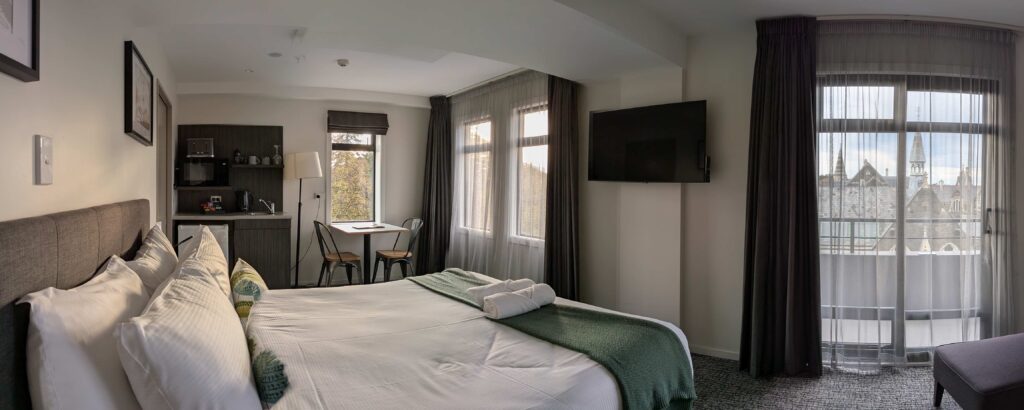
Hotel Give, formerly YMCA (we think) was a very well located place at a reasonable rate. Our little research showed a paucity of such placess in Christchurch.
Our perfectly planned itinerary’s spanner came in the form of Jetstar cancelling its flight from Auckland. This was their last flight for the day, and since we we had to reach Queenstown the same day for a tour, we had to book an Air New Zealand at a price high enough for my kidneys to fear separation. Small consolation – we reached earlier than planned.
Where to stay in Queenstown
And used a bus (instead of the planned Uber) to get to the Rendezvous Heritage Hotel, which practically had its own bus stop. With a Bee card, this did make our life easier.
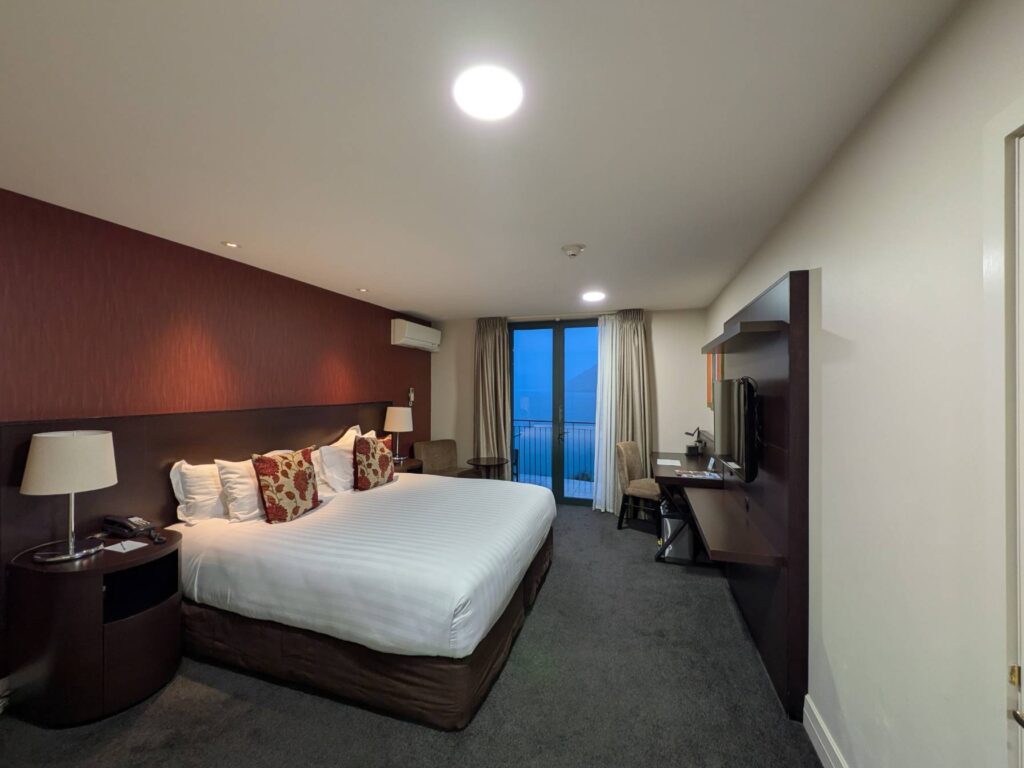
The serious-looking receptionist didn’t exactly make us feel welcome, but the room made up for it…
New Zealand’s scenic magnificence is legendary and any trip to the left side is risky so long as Trump is around, ergo… We were only the second disaster to hit Auckland in a span of two days. We arrived a day after the cyclone Vaianu. Thankfully, barring the minor inconvenience of small shower spells, we were largely unaffected.
Stay in Auckland
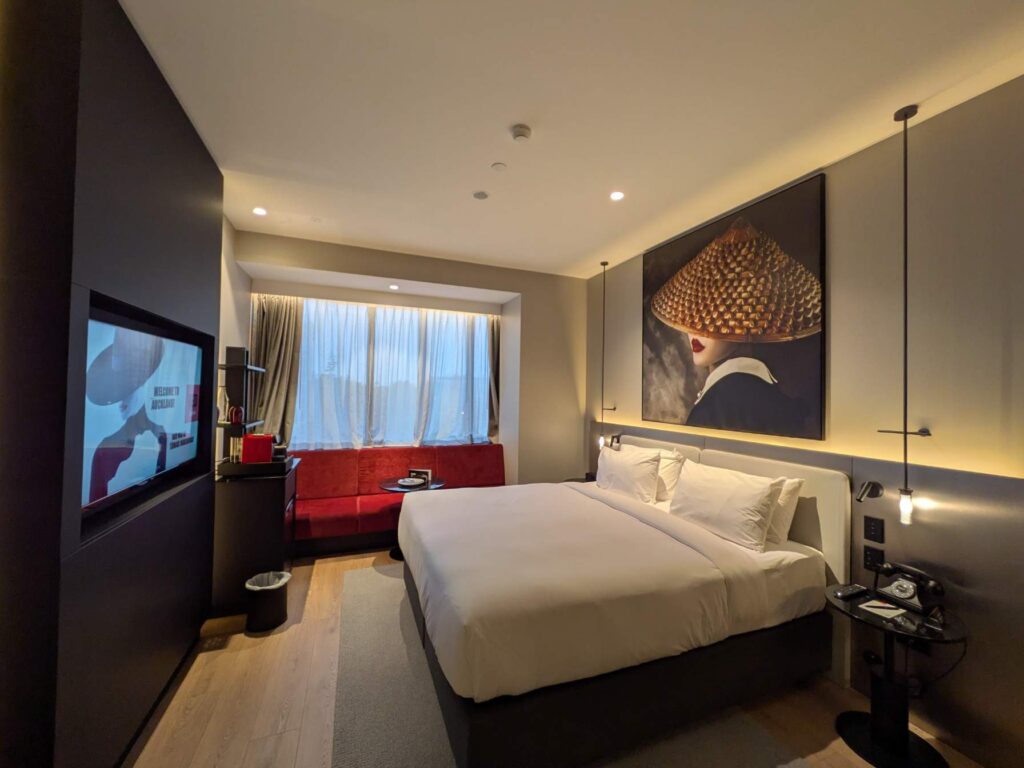
We have aged. We know that because we now choose a Radisson/Accor/Marriott over any cutesy boutiques. Radisson in New Zealand is new. This was Red and we had perks, that helped. We had a decent view of the city, and we could comfortably watch it from that sofa. So, nice enough.