Category: Life Ordinary

  • Schooled for life

    One of the things I spend a lot of time reflecting on is my own OS or wiring, and its updates. In a recent conversation with D, courtesy a college reunion (25 years!) I realised that I have very, very few friends from school and college whom I stay in touch with. Why was that, I wondered.

    I don’t have many memories of my first school – Std 1 and 2. I remember the uniform vividly, and the prizes I won. I have forgotten what they were for though. I have a flood of memories about my second school – Std 3 to 7. Probably because I think they were my best days. I was almost always ranked first in class, I sang, recited poetry, was part of the quiz team, and even played hockey! What I remember most was how accommodating the teachers were when I had to miss classes for practice and competitions. Many of them actively encouraged me to pursue the things I showed some interest and talent in.

    And it went beyond that. There was something in the people I knew then. I remember how once, there was some competition in a different school, and G, my classmate and biggest competitor for the first rank in class, hadn’t advanced to the final round and yet stayed back so she could drop me at home. I shifted schools after 7th because we were moving to a different part of town. Immediately after my exams, I also had a minor surgery. R, my Hindi teacher, visited me in the hospital with her husband. What I remember most, thus, is the kindness.

    I have to admit that I don’t think I repaid it much. After I had shifted schools, I participated in some competition, now representing my new school. My old teachers were there too, and being the uber shy idiot I am, I didn’t even acknowledge them. How bad they must have felt!

    I didn’t like my new school at all. Somehow I just didn’t fit in. They prioritised academics at the cost of everything else, and there was very little space for the other things I enjoyed. While I made a few friends, the camaraderie I had in my other school just wasn’t there. On hindsight, maybe mom’s illness was also playing on my mind.

    I think it also had to do with the kind of neighbourhoods I lived in. Before we shifted, we lived in a university campus. Largely egalitarian – people working in the same place, living in similar quarters, earning within the same range, enjoying the same facilities and so on. When we moved to the city, the house itself was one of the smallest in the street, though I don’t think I paid it that much attention. The inequalities in general were bigger, something that reflected in the kids at school too. The in-groups were stronger, and I feel it to this day in WhatsApp groups.

    It wasn’t that there weren’t kind people there – I remember how M consoled me for hours after mom passed away. I went to ridiculous movies with R,A and S. I had a good friend V, who had a terrible accident and was in pain for months. I used to visit him in the hospital and his relatives used to make me sing. Yes, facepalm. I used to guiltily look at V even as I sang. At reunions (which I mostly avoid) and in the WhatsApp group, I see a totally different person. Someone I cannot relate to at all. Maybe his wiring changed after that accident, and the mental and physical anguish it caused. The change in me after 10th was quite drastic. Mom’s death pretty much unleashed a wicked sense of humour, which was my armour until recently.

    I think, after her death, and later, when my grandmother moved to my uncle’s place during my engineering days, my subconscious probably decided that relationships had a shelf life. That friends were that, only in a certain context. When it came down to it, I was the only person I could depend on. It took D and most of my life to get over that.

    Then again, as the joke goes
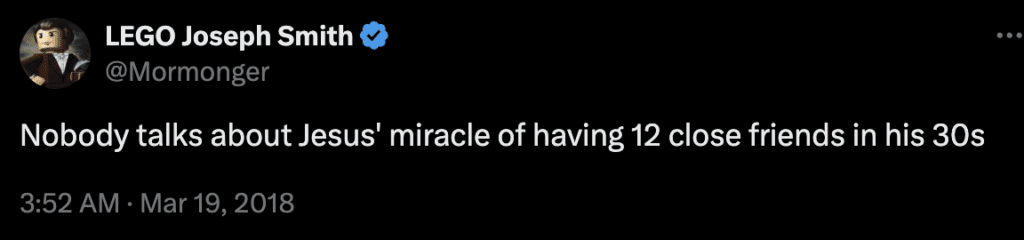
    Jesus miracle friends
  • Rootless

    In Lessons in Chemistry, Lewis Pullman’s character is an orphan (in real life, his father is Bill Pullman, who in other lives was a fantastic American President in the mid 90s and in the 2020’s was a tortured, but great detective). But I digress.

    His character is quite an achiever, but I don’t think that’s how the average orphan’s life goes. There are a lot of famous people who were orphaned, but subsequently adopted. I’d think that the number not adopted would be higher though, and in any case, we rarely know about unexceptional lives. Many of us who lose even one parent early in life feel the loss consciously or subconsciously. And I am reasonably sure it shapes our character and worldview. At least I can speak for myself. Even for those whose loss comes later in life – after their own lives are reasonably well established, there is the sudden jolting realisation that an unquestioning, non-judging backup, even if it was never used, is now gone forever.

    And so I wonder, what does it mean to live a life when it starts with rejection? How does it feel when they become conscious of it the first time? Does it happen when one among them get adopted? Is there loneliness, or does their bond with the others help them avoid that? What about a sense of privacy? Do they even get that, do they even think of that when they rarely have space of their own? What about ownership? How does the concept work when everything is practically shared?

    When they grow up, how does all this affect the way they engage with the world? What about expectations – from others, their own of themselves, or fulfilling someone else’s? Do their relationships suffer from the baggage of rejection? Does their behaviour with others get affected because of their (non) notions about privacy and ownership? How complex must it be for them to accept and receive love?

    Sometimes I think being raised by parents or even one parent is one of those privileges – like having a well-functioning body with all appendages intact, all sense organs working fine – that we easily take for granted. After all, we only have to reflect on the routes we want to travel in the journey of life, and that in itself is not easy. Imagine being rootless, unable to resolve where one came from.

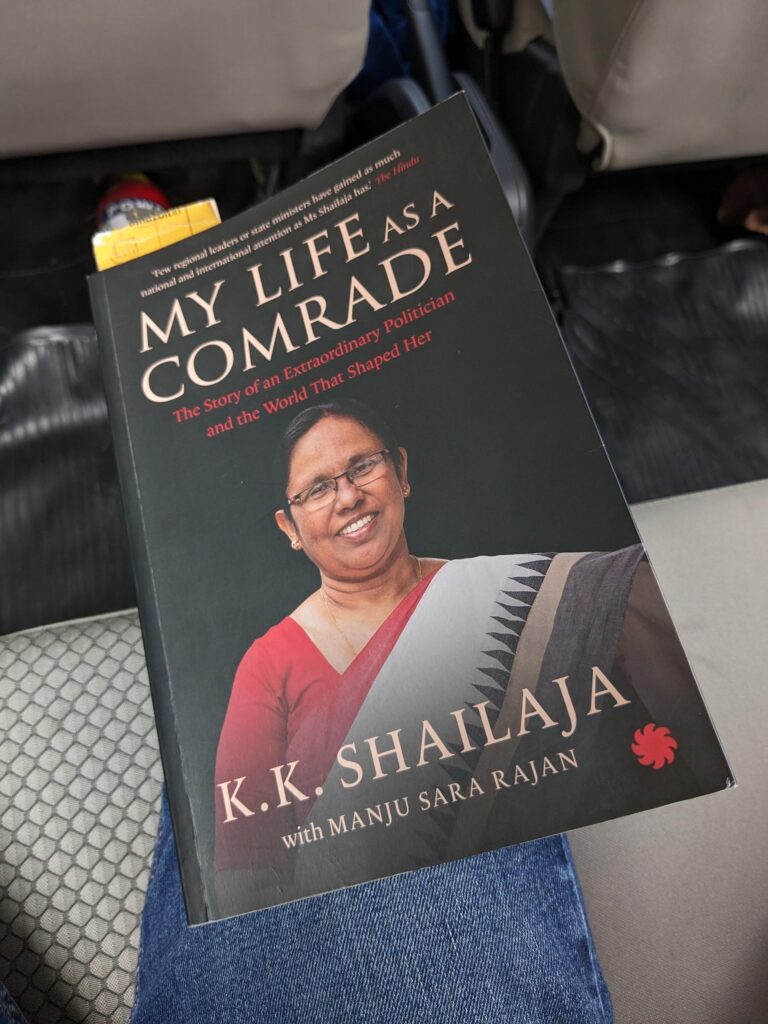
  • My Life as a Comrade: The Story of an Extraordinary Politician and the World That Shaped Her

    K.K. Shailaja, Manju Sara Rajan

    Most Malayalis, as Shailaja teacher points out, are socialists at heart. That, combined with the fact that I was an active member of the SFI in college, meant that My Life as a Comrade was a book that I had to read.

    The book proved interesting to me on multiple counts. The first part is an excellent primer into the milieu that shaped the communist movement in the northern part of Kerala that she belongs to. This is presented not just as history beginning in the colonial era, but also as the living history of a land and its people, with many examples of her own family and neighbours being part of the societal struggle from its early days. In terms of structure and narrative, I liked this part of the book the most.

    My Life as a Comrade then moves on to her own political life – from the grassroots level to becoming a part of the state cabinet as Health Minister. This section provides a good behind-the-scenes look of what it really means (and takes) to have an active political life, specifically for a woman. Towards the end of the book, she also provides her perspectives on why she wasn’t part of the cabinet in its second term, despite winning her seat by the highest-ever majority. It also gives us an idea of how a ministry functions, and the combination of political will and bureaucratic hands-on knowledge that is required for it do good for the public.

    With a cyclone, floods, Nipah, and COVID, hers was an eventful tenure. My Life as a Comrade gets into great detail on how planning, co-operation, and a sharp focus on serving public needs was what led to Kerala becoming a role model for disaster management of all sorts. It has been said many times before, but the way in which the state managed the virus storms by practically creating its own playbook is nothing short of amazing.

    There is an excellent section on what makes the ‘Kerala model’ work, despite low budgets. The social contract between the government and the governed that focuses on quality of life, a transparent and combinatorial system of administration, the willingness of folks across the political spectrum to put aside differences in times of need, and an active community that’s always ready to support each other, that’s what makes the model work.

    The more I read about the different initiatives, the more I was convinced that old age is perhaps best spent in Kerala, despite the climate scares. Not all the infrastructure might be ready, but there is a mindset that is focused on getting there. I have to say that there is a mix of gratitude of pride that I feel in having such an option.

    Having said all that, a couple of things that could have been done better. The first is language – the quality of translation, or rather, transliteration is rather poor. Given the persona, I think the publisher could have put in a lot more effort into this. The second is editing – while it follows a linear narrative, I think the book could have been structured much better.

    But despite that, this is a fantastic read for many lessons – how the power of a state that works on socialist principles (allegations of corruption notwithstanding) can effectively and efficiently improve the quality of life of citizens, the life of a woman politician, and the excellent leadership and managerial aptitude in handling crises.

    My Life as a Comrade: The Story of an Extraordinary Politician and the World That Shaped Her
  • Kaumpromise

    There is nothing quite like death to shake a worldview. There is a reset that happens in one’s head, and the relationship or even lack of it, changes this only in degree, not kind. There is no immunity either, by now, I’d know.

    This one took me out of my comfort zone, in terms of physical location. In the last year or so, especially since the previous time I encountered death, I’ve felt myself become a tad more dispassionate about Cochin as relationships seem a lot more fragile. I am myself much to blame, decades of muscle memory of holding others at arm’s length is hard to shake off. And this is beyond Cochin, and in a place where I have avoided staying for more than a night. Each time I have tried to tell myself that my creature comforts can be skipped for a few days, there has been a rebellion within and I’ve been forced to say “I can’t.”

    I brace myself this time too, and stood in a corner, observing others. I think we all are capable of projecting an aura of “do not approach” when we so want. Mine is at full blast. And yet, one child (whom I first knew as literally a child, and is now about to become a CA) breaks through it, and asks me if I I am ok, if I need anything. Maybe it is that, maybe it is the death gut punch, or maybe it is my newfound willingness to look at (at least some of) the world without a ‘transaction alert’ warning, but the next evening, I am at the table for evening tea, doing stuff I do when I am comfortable with people – pulling their legs, except these are people I had never even said a decent hello to. The day after, I am pushing someone to accept something the family feels he should take, and he is reluctant. They’re all crying, I think I might have forgotten how to. Says a lot.

    But the larger facade broke before that evening at the table, as I watch folks of all forms walk through the door to catch a last glimpse of the one who had passed. It strikes me that I didn’t know more than a few people who would care to drop in to see me before I went up in smoke. The image of an old man, barely able to move a few steps, break down in grief, is still alive in my mind. Sometimes, I realise, it takes death to understand the meaning of life.

    A few days later, I am back in Bangalore. I see the unhindered adulteration in packaged food, in the things that restaurants do, and in general, the greed in every seller, I wonder if that is what has been lost when faceless people sell things to faceless others. It is easier to not care when you don’t see the people you harm. That is not an option in a smaller community or at least it gets punished faster.

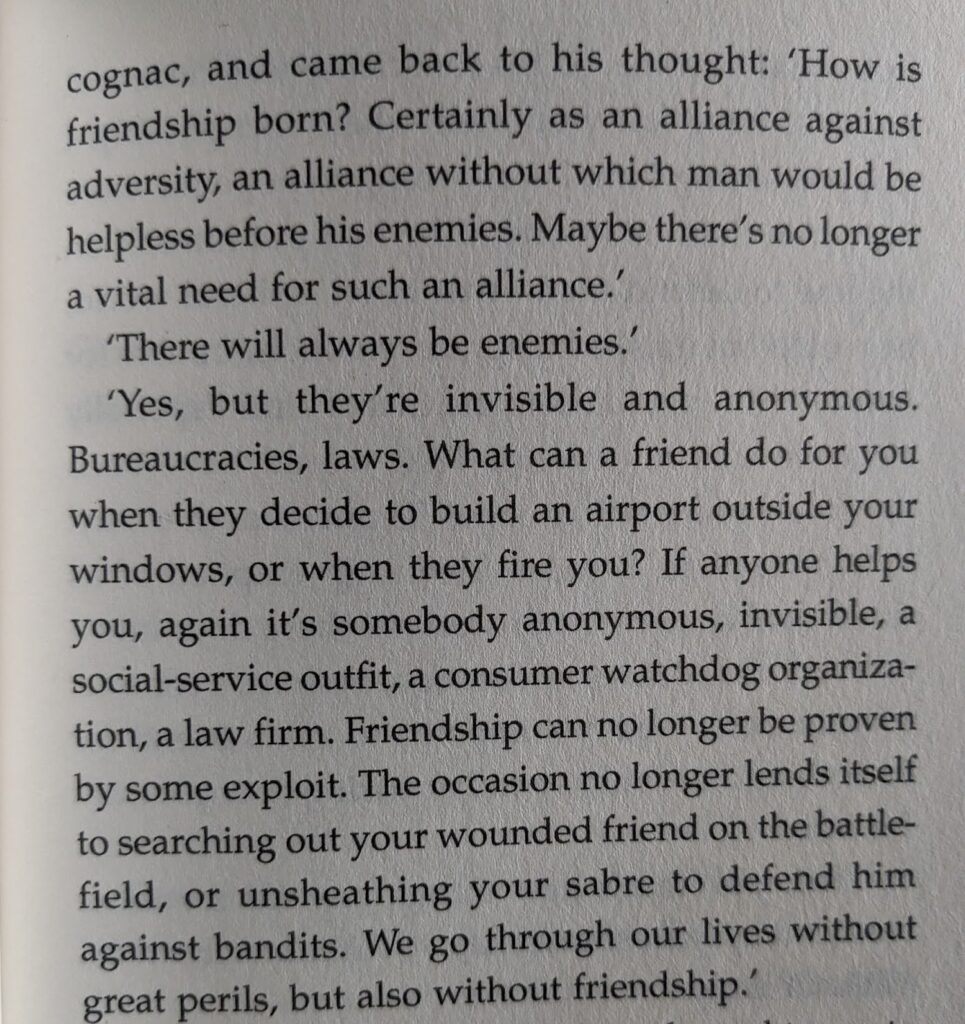
    I am also reminded of what else family and community can do when I read Milan Kundera’s brutal take (in Identity) on why friendship isn’t in vogue these days.

    Milan Kundera Friendship

    When I zoom out of my individualistic approach, I realise I had seen community the way it was meant to be. Life savings in cooperatives, because it’s a world in which everyone still knows everyone else or is just a degree of connection away. Local cable over OTT because births and deaths and important local news is covered in the former. It isn’t perfect, and I won’t romanticise it because I know I wouldn’t be able to tolerate the scrutiny beyond short bursts, but its manifestations are revelatory. As the insightful narrator in Gullak says, yeh trauma bhi hai aur therapy bhi. And I wonder what the proverbial middle path is.

  • Living a life of intentionality

    Context Setting

    Man can do what he wills but he cannot will what he wills.

    Arthur Schopenhauer

    Intelligent people know how to get what they want. Wise people know what’s worth wanting.

    Shane Parrish

    My typical simplistic approach to problem solving is why, what, and how. So here we go:

    (more…)